
Atlanta truck accidents
What If the Truck Driver in My Accident Was Uninsured in Georgia?
An uninsured truck driver in Georgia is unusual because federal law requires commercial motor vehicles in interstate commerce to carry at least $750,000 in liability coverage, and most carriers carry more. If a trucker was operating without required insurance, your options include a direct claim against the trucking company itself, your own uninsured motorist coverage under O.C.G.A. § 33-7-11, and pursuing the motor carrier and any other liable parties. An attorney can identify every possible source of recovery.
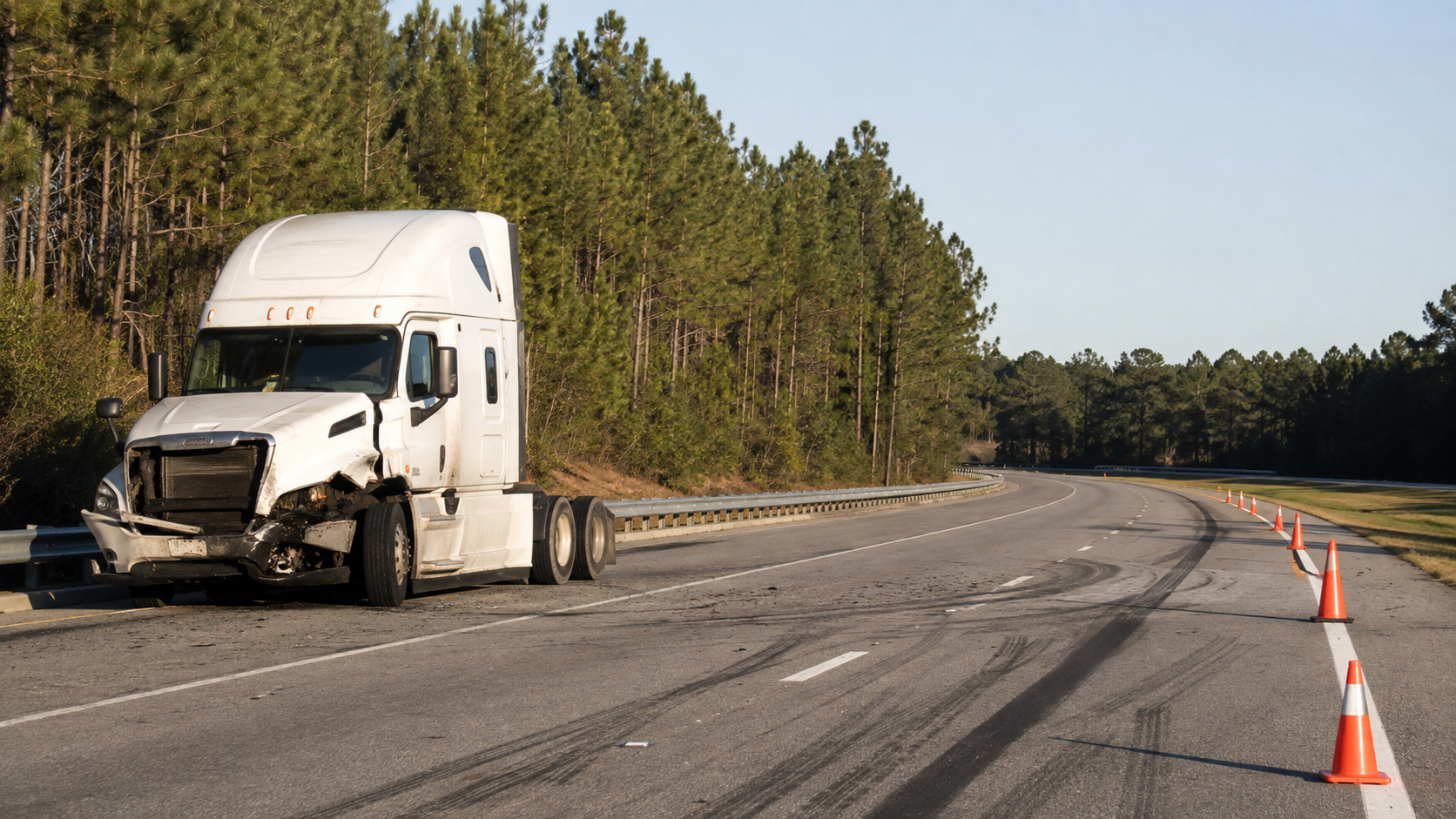
Federal insurance minimums for commercial trucks
Under 49 CFR Part 387, commercial motor vehicles operating in interstate commerce must carry a minimum of $750,000 in liability coverage for general freight. Trucks carrying hazardous materials must carry $1,000,000 to $5,000,000 depending on what they’re hauling. These are federally mandated floors. Georgia’s own commercial vehicle insurance requirements add another layer of state-level obligations. An uninsured commercial carrier is operating illegally under both federal and state law.
Because of these requirements, true cases of a totally uninsured commercial truck are uncommon. What happens more often is that there’s a gap in coverage: the driver was operating outside the scope of the carrier’s policy, the carrier’s policy had lapsed, or the truck was being operated by a leased driver whose coverage situation is disputed. Understanding exactly what coverage exists and who is responsible for it is one of the first things a lawyer investigates in any serious truck accident case.
The Federal Motor Carrier Safety Administration also requires carriers to file proof of insurance with the FMCSA before they can operate. A carrier that lets its policy lapse can have its operating authority suspended. The public FMCSA SAFER database shows a carrier’s current insurance status, and a snapshot of that record taken shortly after the crash can be significant evidence in your claim.
Who else may be legally responsible beyond the driver
Truck accident liability in Georgia often extends beyond the driver alone. The trucking company can be liable for the driver’s negligence under the legal doctrine of respondeat superior when the driver was acting within the scope of employment. If the driver was an independent contractor, the analysis changes but doesn’t necessarily eliminate the carrier’s responsibility. Shippers, loaders, maintenance companies, and truck manufacturers can also share liability depending on the facts of the crash.
Carriers are responsible for verifying their drivers hold valid commercial driver’s licenses, are medically certified to drive, have clean safety records within applicable federal requirements, and have been properly trained. If a carrier put a driver on the road who lacked proper credentials or had a known unsafe driving history, the carrier may face independent liability for negligent hiring or negligent entrustment on top of vicarious liability for the driver’s actions.
Owner-operators present a specific issue. An owner-operator who leases their truck to a carrier under a lease agreement is often covered by the carrier’s insurance during trips performed under that lease, even if the owner-operator technically owns the truck. The lease agreement and the carrier’s insurance filing with the FMCSA determine which policy applies. When an owner-operator is running a trip outside a valid lease, the insurance situation becomes more complicated.
Your own uninsured motorist coverage in Georgia
Georgia law under O.C.G.A. § 33-7-11 requires auto insurers to offer uninsured motorist and underinsured motorist coverage to policyholders. If you carry UM/UIM coverage on your personal auto policy and the truck driver who hit you is uninsured or underinsured, your own insurer steps in to cover the gap up to your policy limits. You should report the crash to your own insurer even when you weren’t at fault and the claim is against another party.
Georgia allows two kinds of UM coverage. “Add-on” coverage pays your damages on top of whatever the at-fault driver’s insurer pays, up to your UM limits. “Reduced-by” or “excess” coverage applies only to the portion of your damages that exceeds the at-fault driver’s policy limits. The type of coverage you carry affects how much you ultimately receive, so it’s worth reviewing your own policy with an attorney before settling anything.
If the truck driver has no insurance at all and you carry UM coverage, your insurer becomes the primary source of recovery. You’ll need to prove the same elements you’d prove against the at-fault driver’s insurer: that the driver was negligent and that the negligence caused your injuries. Your own insurer may still contest the claim, which is another reason legal representation matters even in UM claims.
What to do immediately after the crash
- Call 911. For any serious truck accident in Georgia, law enforcement will file a crash report that documents the vehicles, drivers, and initial observations. This report matters for your claim.
- Photograph the truck’s cab and trailer. Look for the carrier name, USDOT number, and any other identifying information on the truck. This is how you trace the carrier and their insurance.
- Get the driver’s name, CDL number, and any insurance documentation they carry. Drivers are required to carry proof of insurance under federal regulations.
- Check the FMCSA SAFER system. Once you have the carrier name or USDOT number, the SAFER database shows the carrier’s current insurance status, inspection history, and any out-of-service orders.
- Contact a lawyer before talking to any insurer. If the truck driver’s coverage is unclear, the claims process becomes complicated quickly. An attorney can identify all parties and insurance sources before you make any statements.
- Send a preservation letter through your lawyer. Electronic logging device data, black-box records, and driver qualification files can be erased or overwritten quickly. A formal preservation demand puts the carrier on legal notice to retain all of it.
- Notify your own insurer. Report the crash to your own insurance company so your UM/UIM coverage is preserved if needed.
Hit by a truck with no insurance in Atlanta or DeKalb County?
Uninsured truck accident claims require fast action to preserve evidence and identify all available coverage. Lonnie Law, LLC handles truck accident cases on a contingency-fee basis. No fee unless we recover.
Suing the trucking company directly
When a truck driver carries no insurance and the motor carrier’s coverage is disputed or absent, suing the carrier and driver directly is an option. A judgment against the carrier is enforceable against the company’s assets. In some cases, state regulators have the ability to require carriers to post bonds as a condition of operating authority. Identifying the right defendants and the right legal theories takes investigation that a truck accident attorney can guide.
Georgia has a two-year statute of limitations for personal injury claims under O.C.G.A. § 9-3-33. That clock starts on the date of the crash. Even when insurance coverage is genuinely absent, filing within that window preserves your legal rights. Waiting too long eliminates them regardless of how clear the liability may be.
In cases involving serious or catastrophic injuries, the investigation matters as much as the legal theory. Accident reconstruction, medical documentation, economic loss analysis, and a thorough review of the carrier’s safety history all build the case for full compensation. The goal is to recover what your injuries actually cost, not just whatever a single insurer offers voluntarily.
Frequently asked questions
Is it actually possible for a commercial truck to have no insurance?
It is possible but uncommon. Federal law requires commercial motor vehicles in interstate commerce to carry minimum liability coverage before they can operate, and carriers must file insurance proof with the FMCSA. However, policies can lapse, owner-operators can operate outside the scope of a carrier lease, and gray areas around contractor status can create coverage disputes that function like a coverage gap even when some policy technically exists.
What is the federal minimum insurance for a commercial truck?
Under 49 CFR Part 387, the minimum for most general freight is $750,000. Carriers hauling household goods must carry $300,000. Trucks carrying hazardous materials are subject to higher minimums, ranging from $1,000,000 to $5,000,000 depending on the materials. These are floors set by federal regulation; many carriers carry higher limits voluntarily.
Can I use my own uninsured motorist coverage if a truck driver has no insurance?
Yes. Georgia’s uninsured motorist statute, O.C.G.A. § 33-7-11, allows you to make a claim against your own UM/UIM coverage when the at-fault driver is uninsured. You’ll still need to prove the truck driver was negligent and that the negligence caused your injuries. Your own insurer may dispute the claim, so having an attorney involved is advisable even in first-party UM situations.
Can I sue the trucking company even if the driver was an independent contractor?
Sometimes. Carriers can be liable for independent contractors under various legal theories, including the Graves Amendment exception, negligent entrustment, and statutory employer doctrines that apply under federal trucking regulations. The owner-operator lease arrangement and the degree of control the carrier exercises over the driver’s work are key factors. An attorney evaluates the specific relationship to determine the right defendants.
How long do I have to sue after a truck accident in Georgia?
The personal injury statute of limitations in Georgia is two years from the date of the crash under O.C.G.A. § 9-3-33. If the crash involved a government-owned vehicle or a government entity, shorter notice deadlines may apply. Missing the deadline typically bars your claim regardless of how strong the liability case is, so acting promptly matters.
What if the truck driver had some insurance but it’s not enough to cover my injuries?
If the at-fault truck driver or carrier has insurance but the coverage isn’t sufficient to pay for all of your damages, your own underinsured motorist coverage can fill part of the gap up to your policy limits. You may also have claims against other parties whose negligence contributed to the crash. Identifying all possible sources of recovery is one of the key roles an attorney plays in a serious truck accident case.