
When you’re involved in an accident with an Uber vehicle—whether as a passenger, another driver, or pedestrian—the insurance landscape becomes uniquely complicated. Unlike traditional car accidents, Uber accidents trigger a tiered insurance system that changes based on the driver’s exact app status at the moment of collision. At Lonnie Law LLC, we understand how Uber’s $1 million liability policy works, how to obtain critical trip data from the app, and how to navigate the specific insurance phases that determine your recovery. Our Brookhaven Uber accident attorneys have the specialized knowledge to maximize your compensation when Uber’s corporate insurance is involved.
Uber has fundamentally transformed Brookhaven’s transportation landscape, but accidents involving Uber vehicles present distinct legal challenges that require specialized representation. The complexity stems from Georgia’s transportation network company laws, which created specific insurance requirements based on the driver’s activity status. When an Uber driver causes an accident, determining which insurance applies depends on whether the app was off, waiting for requests, en route to pickup, or transporting a passenger.
Insurance companies may use this tiered system to dispute coverage. At Lonnie Law LLC, our team works to obtain preservation orders for Uber’s electronic records, analyze the driver’s app status through forensic investigation, and identify the correct insurance carrier. Our experience with Georgia’s rideshare regulations helps clients navigate the complexities of these claims.
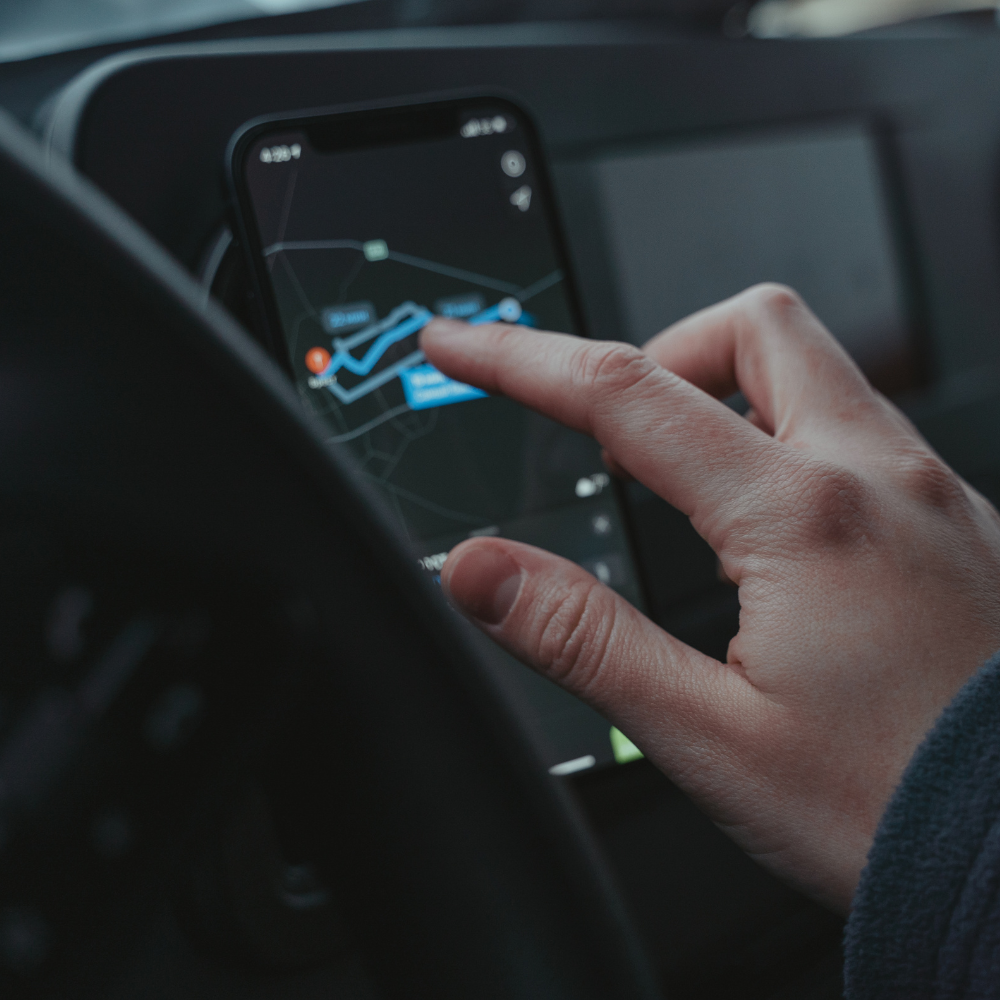
Most Uber accidents result from driver negligence, amplified by the unique pressures of app-based driving. Understanding these causes helps establish liability and strengthens your claim:
Rideshare drivers are required to constantly interact with the Uber app to accept rides, navigate, and communicate with passengers. This built-in distraction is a systemic risk that Uber has a responsibility to mitigate.
Unlike traditional taxi drivers, Uber drivers set their own hours and often work long shifts to maximize earnings. There are no mandatory rest requirements, meaning fatigued drivers regularly operate on the platform without restriction.
Uber's acceptance rate metrics create implicit pressure on drivers to accept rides rapidly, sometimes before they have safely pulled over or come to a complete stop — a dangerous practice that contributes to accidents.
Uber's background check process has known limitations and the company provides minimal formal driving training. This means drivers with poor driving histories or inadequate skills may be operating on the platform.
Despite background checks, impaired Uber drivers do operate on the platform. Victims of DUI accidents involving an Uber driver may be able to pursue a case against both the driver personally and Uber's commercial insurance policy.
Uber requires vehicles to meet minimum standards, but ongoing maintenance is the driver's responsibility. Brake failures, tire blowouts, and other mechanical issues caused by neglected maintenance can make both the driver and Uber liable.
Uber's insurance coverage changes depending on the driver's status (offline, app on/waiting, en route). Navigating these coverage tiers is complex, and insurers will exploit any ambiguity to minimize your payout.
Because many Uber trips occur in high-traffic urban areas and during peak congestion hours, accidents often involve significant impact forces. We represent clients who have suffered:
Establishing fault in an Uber accident requires understanding both traditional negligence law and Georgia’s specific transportation network company regulations (O.C.G.A. § 33-1-24). Liability may extend to multiple parties depending on the circumstances. Georgia follows a modified comparative negligence rule (O.C.G.A. § 51-12-33), which allows recovery if you are less than 50% at fault, though your compensation reduces by your percentage of fault. Uber classifies drivers as independent contractors to limit corporate liability, but Georgia law permits holding Uber directly responsible in cases of negligent hiring, negligent retention, or when the company’s app design encourages distracted driving. Proving Uber’s liability requires obtaining internal records of driver complaints, prior incidents, and demonstrating Uber knew or should have known about driver safety risks.
The critical evidence includes digital trip records showing the driver’s app status at collision time, GPS coordinates confirming location and speed, timestamped data proving the driver was en route or transporting passengers (triggering Uber’s $1 million coverage), and driver performance records from Uber’s system. Insurance companies will scrutinize every detail to shift blame and reduce payouts. Our firm issues preservation letters immediately after accidents to prevent Uber from destroying electronic evidence and works with accident reconstruction experts to establish fault through scientific analysis.

We take a hands-on approach—you work directly with Attorney Lonnie Duong throughout your case. No case managers or paralegals handling critical decisions. You receive personalized attention and direct communication with the attorney managing your case.

Lonnie Law LLC operates on a contingency fee basis, meaning clients pay no upfront costs. A fee is only collected if compensation is successfully secured on the client's behalf, ensuring that quality legal representation is accessible to everyone.
Lonnie Law LLC provides deep knowledge of local courts, Brookhaven's traffic patterns, and Georgia's transportation network company laws. We understand Uber's corporate structure and insurance policies better than generalist personal injury firms.

Attorney Lonnie Duong has specific experience with app-based rideshare accidents, understanding how to obtain Uber's electronic records, navigate the tiered insurance structure, and counter Uber's independent contractor liability arguments.
Georgia law allows you to recover both economic and non-economic damages after an Uber accident. The type and amount of compensation depends on injury severity, liability determination, and which insurance coverage applies:
Economic Damages: These are quantifiable financial losses including all medical expenses (emergency care, hospitalization, surgery, medication, physical therapy, ongoing treatment), lost wages and reduced earning capacity, property damage including vehicle repair or replacement, and future medical care costs projected over your lifetime.
Non-Economic Damages: These compensate for intangible losses such as physical pain and suffering, emotional distress and mental anguish, loss of enjoyment of life and inability to engage in activities you once enjoyed, permanent disability or disfigurement, and loss of consortium (for spouses of injured victims).
Special Considerations for Uber Cases: Unlike standard car accidents with policy limits of $25,000-$50,000, Uber accidents involving active trips have access to $1 million in liability coverage under Georgia law (O.C.G.A. § 33-1-24). This substantially higher coverage allows for full compensation in cases of catastrophic injury. However, Georgia’s comparative negligence rule applies—if you are found partially at fault, your compensation reduces proportionally.

If you are involved in an accident while riding in an Uber in Brookhaven whether near Town Brookhaven along Peachtree Road or anywhere else in the city call 911 immediately and move to safety if you are able. When law enforcement arrives be sure to get the officer’s name badge number and incident number. Also take note of the driver’s name as shown in the Uber app the vehicle information and the trip details if you can still access them as this information can be important later.

Rideshare accidents can result in a range of injuries that may not be fully apparent right away. Many people find it helpful to be evaluated by a healthcare provider shortly after the incident even without obvious symptoms. A medical record created close in time to the accident can help establish the connection between any injuries and the crash which can matter significantly during the claims process.

Document the scene thoroughly while you have the opportunity. Photograph all vehicles involved the road conditions any damage and your surroundings. If the Uber app still shows your trip details take a screenshot before closing it. Collect the driver’s information and insurance details and gather contact information from any witnesses at the scene. Note the time the route and the location as specifically as you can.

Uber accident claims can involve multiple insurance policies and insurance adjusters whether from Uber’s insurer or the driver’s personal carrier may reach out relatively soon after the incident. Many people find it helpful to avoid giving a recorded statement or providing detailed accounts of the accident or their injuries before speaking with an attorney. You can confirm basic contact information and a claim number without going further.

Rideshare accident claims involve a specific set of insurance and liability considerations that differ from a standard car accident. Speaking with an attorney can help you understand how those layers work and what options may be available to you. Lonnie Law LLC offers a free consultation to help you get clarity on the process before making any decisions.

Keep a running journal of how your injuries are affecting your daily life including sleep mobility work and general wellbeing. Save all medical bills prescription records and any correspondence from insurance companies. If there were any out-of-pocket costs related to the accident document those as well. Organized records make it easier to demonstrate the true impact the accident has had on your life.
I was referred to Lonnie Law to help settle an auto accident I was involved with earlier this year. It was my first time needing an attorney. Having Lonnie work so hard on my behalf and Leona, my case manager, keeping me updated every step of the way made the entire experience the least stressful part of my whole ordeal. They truly advocate for their clients and do their very best to get you what you deserve. I am forever grateful for them both. I hope I’m not in a position to need them again but in case I do I’ll always keep them in mind.
Google Review
Lonnie and her team are the absolute best. I couldn’t have been referred to a better attorney! The entire case coordination and follow-up was amazing. Definitely a good attorney if this is the first time experiencing any issue. Thanks Lonnie and Aaron (case manager) for your support!
Google Review
Google Review
Attorney Lonnie and her team provided outstanding service from start to finish. This was our first time dealing with a personal injury case and we didn’t know what to expect. Attorney Lonnie and her assistant Annette addressed all of our questions throughout the whole process. Their team was attentive, professional and dedicated to achieving the best outcome for our case. We highly recommend Lonnie Law to anyone seeking personal injury legal assistance.
Google Review
Made the whole claim process as smooth a painless as possible. Very professional and a pleasure to have represent me.
Google Review
I have to say my experience with Lonnie’s Law Firm has been a 10/10 experience for me. This was my first time ever needing an attorney, and wow, it was THE best decision. From the very beginning, I was treated with care, compassion, and support by Lonnie and her team. They made sure to communicate with me every step of the way, and when there were things that I did not understand, Lonnie and her team would explain until I fully understood. I couldn’t have asked for a better experience; I promise it doesn’t get any better than this! Thank you to Lonnie and Annette for being exceptional!
Google Review
Georgia law sets specific deadlines for filing personal injury lawsuits, known as statutes of limitations. The exact deadline can depend on the type of case and the circumstances of the injury. It is important to be aware of these time limits, as failing to file a claim in time can bar recovery.
Certain cases, such as medical malpractice, have specific procedural requirements under Georgia law, such as filing an expert affidavit along with the initial complaint. An attorney can explain the specific requirements that may apply to a particular case.
Uber classifies drivers as independent contractors to limit direct liability. However, Georgia law allows lawsuits against Uber in specific circumstances including negligent hiring (failing to conduct adequate background checks), negligent retention (keeping dangerous drivers despite complaints), and defective app design that encourages distracted driving. An experienced attorney can evaluate whether Uber has direct liability in your case.
The timeline for a personal injury case can vary widely depending on its complexity, the severity of the injuries, and whether it proceeds to trial. Some cases resolve in months, while others may take several years. An attorney can provide a more specific estimate based on the details of the case.
The driver's personal auto insurance typically excludes coverage for accidents occurring during commercial rideshare activity. Uber's insurance is primary when the driver is en route to pickup or transporting passengers ($1 million coverage). When the driver is online but waiting for requests, Uber provides contingent coverage ($50,000/$100,000/$25,000) that only applies if personal insurance denies the claim. When the app is off, only the driver's personal policy applies.
The concept of a discovery rule, which starts the statute of limitations when an injury is discovered rather than when it occurred, is very limited in Georgia. Understanding how these legal principles apply is a key part of evaluating a potential claim.
Obtaining a second opinion from an independent professional can be a helpful step in understanding the full scope of an injury or situation. This information can be a valuable part of the overall case assessment conducted by an attorney.
In cases involving a wrongful death, specific family members may be eligible to file a claim under Georgia law. The legal framework defines who can bring a claim and what damages may be sought. An attorney can explain the specific rules that apply to a given situation.

If you or a loved one has been affected by an Uber accident, understanding the legal process is the first step. Contact Lonnie Law LLC today for a confidential consultation to discuss your situation with our experienced Brookhaven team.